- News
Why Mentoring Matters in the Law and Why We Take It Seriously
• April 21, 2026

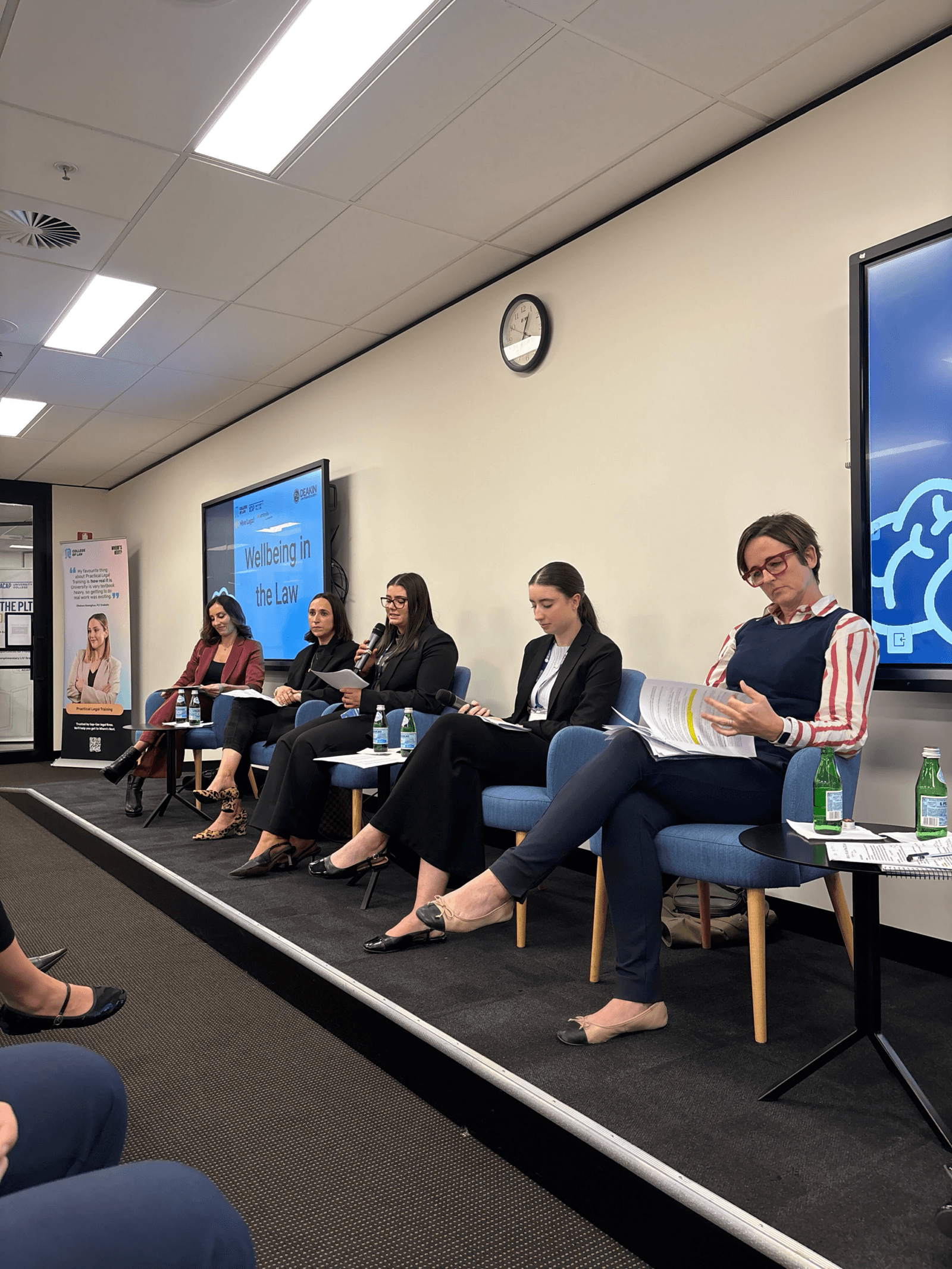
Recently, Eve Smith of our team had the opportunity to speak on a wellbeing panel with the Deakin Law Students’ Society.
We are also in the midst of continuing our work with students from Mac.Robertson Girls’ High School, mentoring student as they begin thinking about careers, purpose and the kind of professionals they want to become.
These moments always prompt reflection because mentoring, in our view, is not an “extra” in the profession, it is part of the work.
Both Eve and Jane came into the legal profession at a time when mentoring was not always visible or accessible. You learned by doing. You watched, absorbed and kept going without asking questions.
There were many positives in that resilience, independence, strong technical grounding but there were also challenges.
Wellbeing was not often spoken about year ago, or until recently and emotional load has rarely been acknowledged. The idea that you could practise law in a way that was both effective and humane was certainly not always modelled, and still it not modelled everywhere by any means.
The profession is how slowly changing. Younger lawyers are asking different questions not just “How do I succeed?” but “How do I do this sustainably?” and “What kind of lawyer do I want to be?”
Mentoring creates a bridge between experience and possibility. It allows younger practitioners, and even students, to see that there is more than one way to build a legal career and it opens up conversations about boundaries, wellbeing, values and longevity in a profession that can be demanding.
It also allows us, as more experienced practitioners, to be honest about our own journeys including what we would do differently.
One of the things we value most about working with students from Mac.Robertson Girls’ High School is that these conversations begin early -before university, before career pathways are locked in and before assumptions about “what law looks like” take hold.
We talk to students not just about what lawyers do, but how they think, how they make decisions, and how they look after themselves while doing it.
We talk about the reality of working with people at difficult points in their lives.
We talk about the importance of emotional intelligence alongside academic achievement.
We talk about building a career that is aligned with who you are not just what you can achieve. We hope that if those ideas are introduced early, they have a chance to shape the profession over time.
At Umbrella, mentoring is not separate from how we practise. It is an extension of it.
There is a responsibility that comes with experience not just to practise well, but to make the path clearer for those coming behind you and mentoring is one way of doing that.
It is not about having all the answers but it is about creating space for better questions, and sharing enough of your own experience to help others navigate their way with a little more clarity.
If we can help even a handful of young people enter the profession with a stronger sense of how to do this work well and how to do it without losing themselves in the process then that is worthwhile.
Because the future of the profession is not just shaped by what we do in our files it is shaped by what we model, what we share, and what we choose to pass on.